
DIY electrical work in Florida: what's legal and when to call a pro
By Thomas Quinn · Updated 2026-07-08
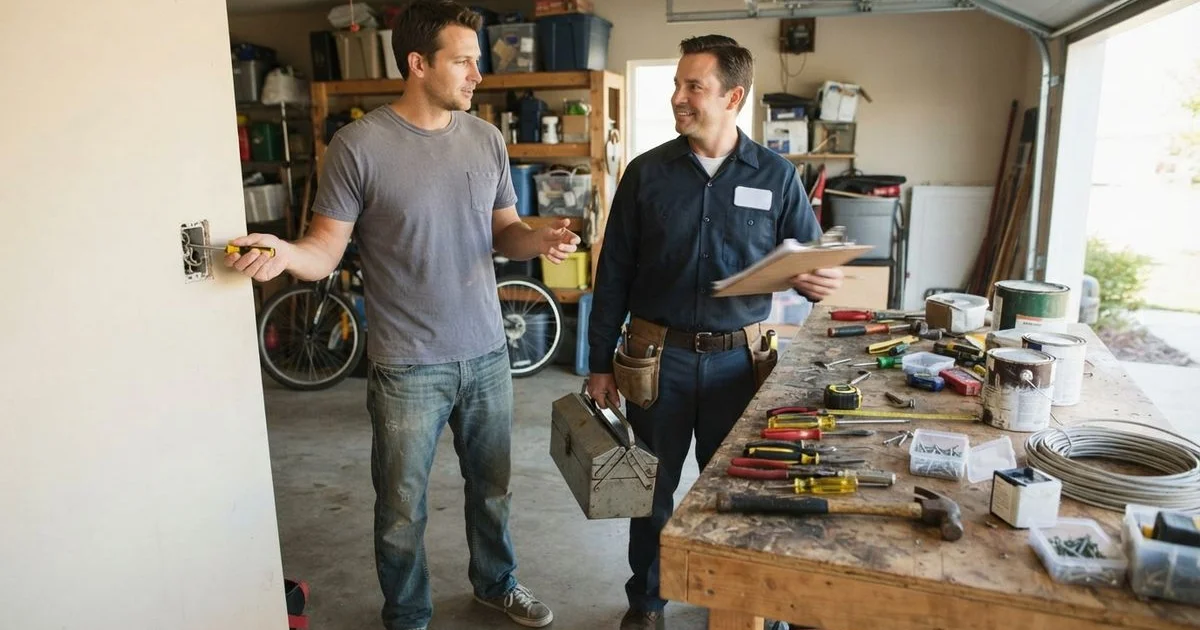
This is general information, not legal advice on what you’re permitted to do in your specific jurisdiction. Rules on owner-performed electrical work vary by county and city, so confirm current requirements before starting anything more involved than a simple swap.
The line that actually matters
Florida generally allows homeowners to do certain electrical work on their own primary residence, sometimes under an owner-builder permit, but the specifics depend on the county or city and the scope of the job. The more useful question isn’t “is this legal” in the abstract, it’s “does this require a permit,” because permit-required work almost always means either hiring a licensed electrician or pulling an owner-builder permit and accepting the inspection and liability that comes with doing it yourself.
What’s usually fine to handle yourself
Simple, contained tasks are where most confident DIYers stay, and reasonably so:
- Replacing a light fixture, ceiling fan, or switch in its existing location
- Swapping an outlet for an identical one, with the power off
- Replacing a broken outlet or switch cover plate
- Installing a plug-in surge protector or smart plug
- Changing a breaker for an identical amperage rating (with the panel de-energized and understanding the risk)
None of these typically change the circuit’s wiring, add new load, or require a permit.
What should go to a licensed electrician
- Any new circuit, including EV chargers, generators, hot tubs, or major appliances
- Panel upgrades or service changes
- Whole-home or partial rewiring
- Anything involving the main service entrance or meter
- Work in wet locations without confirmed GFCI protection
- Aluminum or knob-and-tube wiring repairs
These jobs share a common thread: getting them wrong doesn’t just mean a fixture doesn’t work, it can mean a fire hazard that’s invisible until something fails.
Why the stakes are higher than a failed light switch
Electrical mistakes don’t always announce themselves immediately. A loose connection at a DIY-wired outlet can run warm for months before it fails. An undersized wire on a new circuit can work fine under light use and overheat under real load. This is different from most home DIY projects, where a mistake is usually visible and fixable before it causes real harm. That gap is the core reason licensing and permitting exist for anything beyond simple swaps.
| Factor | DIY-friendly | Hire a licensed electrician |
|---|---|---|
| Scope | Same-location swap, no new wiring | New circuit, panel work, rewiring |
| Permit required | No | Usually yes |
| Consequence of a mistake | Fixture doesn’t work | Fire risk, insurance complication |
| Insurance impact | Minimal | Can affect claims if work fails inspection standards |
The insurance and resale angle
If DIY electrical work is ever involved in an insurance claim, whether for fire, water damage, or something unrelated that just happens to expose the wiring, insurers can ask about who did the work and whether it was permitted where required. Unpermitted or improperly done work can complicate that claim. It also tends to surface during a future home sale if a buyer’s inspector or electrician spots something that doesn’t match code.
If you’re renting a home you’re upgrading
Renters have a narrower lane than homeowners. Most leases prohibit tenants from making electrical changes without the landlord’s written approval, and an owner-builder permit generally isn’t available to someone who doesn’t own the property. If a rental unit needs electrical work, from a flickering outlet to something bigger, the right move is reporting it to the landlord rather than fixing it yourself, both for safety and because unauthorized work can create a lease violation on top of the electrical risk.
A reasonable way to decide
If the job involves the same fixture type going back in the same spot, with the power confirmed off, it’s usually a fair DIY candidate for someone comfortable with basic tools. If it involves new wiring, the panel, or anything you’re not fully sure how to test safely afterward, that’s the point to call a licensed electrician rather than find out the hard way.
Compare licensed electricians serving Sanford on the homepage, and see our methodology for how we evaluate licensing and code compliance.
FAQ
- Can I legally do my own electrical work in Florida?
- In many jurisdictions, a homeowner can pull an owner-builder permit and do electrical work on their own primary residence. Rules vary by county and city, so confirm with Seminole County or the City of Sanford before starting anything that would normally need a permit.
- What's the simplest electrical task that's genuinely fine to DIY?
- Replacing a light fixture, switch, or outlet in the exact same location, with the power off and the correct wire gauge, is a common starting point that most confident DIYers can handle safely.
- Why do insurers care whether I did the work myself?
- Homeowner DIY electrical work that later causes a fire or damage can complicate a claim if it wasn't done to code or wasn't permitted where required. Some insurers ask directly about this during underwriting or after a claim is filed.
- Is it cheaper to DIY, once everything is factored in?
- Sometimes, for small tasks. For anything involving the panel, new circuits, or permit-required work, the cost of doing it wrong (a failed inspection, a fire risk, an insurance complication) usually outweighs the labor savings.