
AFCI and GFCI protection: what Florida code requires and is a retrofit worth it
By Thomas Quinn · Updated 2026-07-09
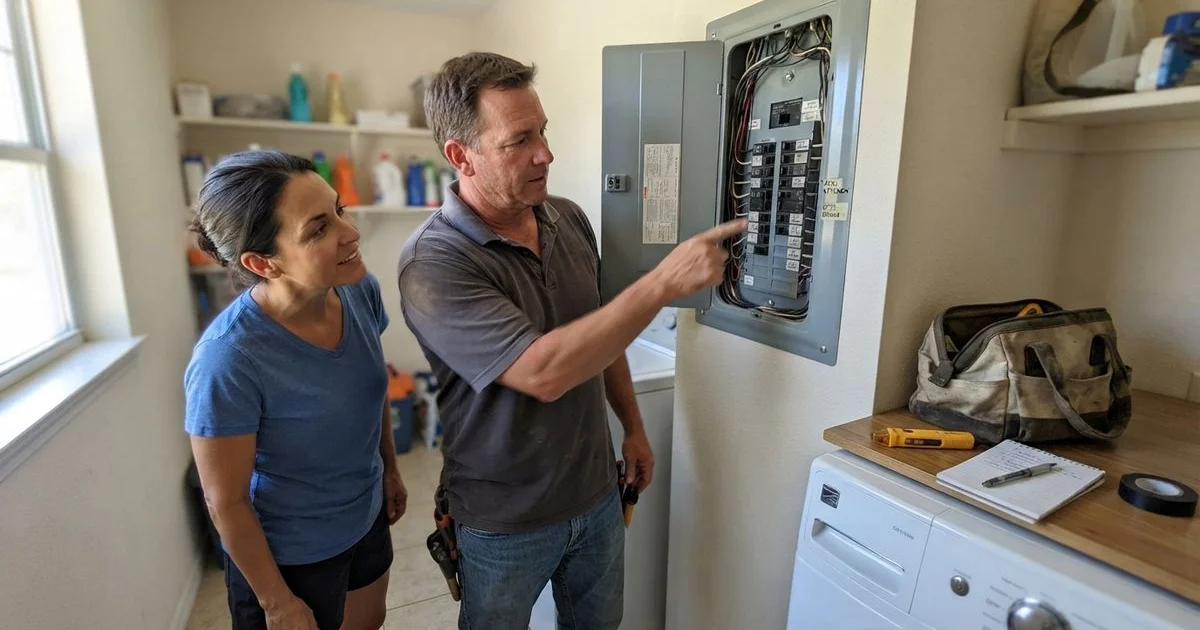
Two acronyms come up constantly in electrical panel conversations, and homeowners often only learn what they mean once an inspector or electrician flags a gap: AFCI (arc-fault) and GFCI (ground-fault) protection. Both are safety devices, both have expanded in what code requires over the years, and both are common gaps in a home that hasn’t touched its electrical panel since before the current requirements existed.
What each one actually protects against
GFCI protection watches for current leaking to ground, the kind of fault that happens when electricity finds an unintended path, often through water or a person. It trips fast, within milliseconds, which is why it’s required anywhere water and electricity are likely to be close together: kitchens, bathrooms, garages, and outdoor outlets.
AFCI protection watches for the electrical signature of arcing, a dangerous condition where current jumps across a gap in damaged wiring or a loose connection, generating heat that can ignite nearby material. It’s the protection code has expanded most aggressively over the last two decades, moving from bedrooms only to most living spaces in current code cycles.
Why an older home is likely missing coverage
Code requirements for both have expanded gradually, which means a home wired to code in, say, 2005 legitimately met the standard at the time but is missing coverage a home wired today would have by default. This isn’t a sign of bad original work. It’s just how code evolves: each cycle typically adds rooms or circuit types to the requirement list rather than rewriting it from scratch.
| Area | GFCI required | AFCI required (current code) |
|---|---|---|
| Kitchen counters | Yes | Often, varies by cycle adopted |
| Bathrooms | Yes | No (GFCI is the primary requirement) |
| Bedrooms | No | Yes |
| Garage, unfinished basement | Yes | Varies |
| Outdoor outlets | Yes | No |
| Living rooms, hallways | No | Increasingly yes in recent cycles |
Are you legally required to retrofit?
Generally not, just for owning an older home. Existing wiring is typically grandfathered unless you’re doing a renovation that touches the circuit, adding new circuits, or your local jurisdiction has a specific ordinance tied to a home sale or major permit. New work, additions, and any circuit an electrician opens up for other reasons usually does need to meet current code, which is often how a home ends up getting partial AFCI or GFCI coverage over time as different rooms get touched for unrelated projects.
Is retrofitting worth it anyway
For GFCI, the answer is close to yes across the board. GFCI outlets and breakers are inexpensive relative to the protection they add, and retrofitting kitchens, bathrooms, and garages that predate the requirement is a common, low-disruption upgrade.
AFCI retrofitting is a bigger conversation. Combination AFCI/GFCI breakers cost more than standard breakers, and older wiring can sometimes trigger nuisance tripping on an AFCI circuit due to wear that wasn’t a problem before, which means retrofitting isn’t purely a swap-and-done job in every case. Many homeowners choose to add AFCI protection specifically to bedroom circuits, where the requirement has been in place longest and the safety case is clearest, rather than attempting a whole-panel retrofit in one pass.
What nuisance tripping actually means
If an AFCI breaker trips repeatedly right after installation, it doesn’t always mean the breaker is faulty. Older wiring, certain types of vacuum motors, dimmers, or even some LED drivers can generate an electrical signature similar to an arc fault, which the breaker reads as a real hazard. A qualified electrician can usually tell the difference between a device causing nuisance tripping and a genuine wiring problem the breaker correctly caught, which is one more reason to have an AFCI retrofit installed and diagnosed by a professional rather than swapped in as a DIY project. If your home’s older wiring turns out to be aluminum or knob-and-tube rather than modern copper, that’s worth flagging before an AFCI retrofit; see our guide on aluminum wiring and knob-and-tube risk for how to check for it.
How to think about it as a decision
If you’re already having a panel opened for another reason, like a service upgrade or adding a circuit, that’s the natural moment to add AFCI and GFCI coverage to the areas that are missing it, since the incremental labor cost is lower than a standalone visit. If nothing else is prompting panel work, prioritize GFCI in wet areas first, since it’s inexpensive and the safety case is the most immediate, then talk to an electrician about whether a targeted AFCI retrofit on bedroom circuits makes sense for your home’s wiring condition.
Compare panel upgrade providers serving Sanford on the homepage, and see our methodology for how we weigh code-compliance experience in our scoring.
FAQ
- Do I legally have to add AFCI and GFCI protection to an older home?
- Not automatically. Existing homes are typically not required to retrofit to current code unless you're doing a renovation, adding circuits, or a local ordinance requires it at time of sale. New work and new circuits, though, generally must meet current code.
- What rooms need GFCI protection?
- Kitchens, bathrooms, garages, unfinished basements, and outdoor outlets are the standard list. Laundry areas and anywhere near a sink or water source typically need it too.
- What rooms need AFCI protection?
- Current code requires AFCI protection on most bedroom circuits and increasingly on other living areas like family rooms and hallways. Requirements have expanded over successive code cycles, so a home wired 15 years ago may be missing coverage a new build includes by default.
- Can one device provide both AFCI and GFCI protection?
- Yes, combination AFCI/GFCI breakers and outlets exist and are common in newer installations, covering both protection types on a single circuit without needing two separate devices.